

If your hairline has disappeared and your crown keeps expanding, you may wonder whether you missed your chance. Am I too bald for a hair transplant? The answer depends on more than how much scalp you can see.
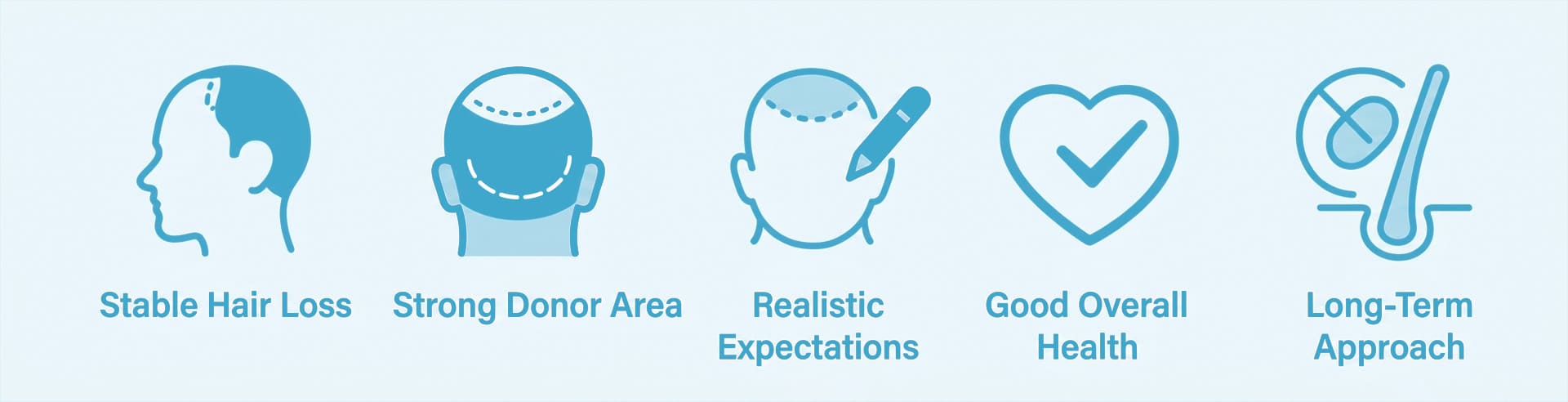
What Determines Whether You Are a Hair Transplant Candidate?
A hair transplant moves existing follicles into areas affected by hair loss. It cannot create an unlimited supply of new hair.
Doctors assess the cause and pattern of your hair loss, the condition of your scalp, your medical history, and the amount of suitable donor hair available.
Your expectations also matter. Improving the appearance of the frontal area is a different goal from restoring dense coverage across the entire top of your head.
The question is whether your available hair can support a realistic plan.
Why Your Donor Area Matters More Than You Think
The donor area is usually located at the back and sides of your scalp. Doctors look for healthy follicles in regions expected to remain more resistant to pattern hair loss.
A fuller-looking donor area may offer more options. Visible thinning in those regions may reduce the supply of suitable follicles.
Appearance alone cannot confirm suitability. Hair length, lighting, and styling can hide thinning or make it appear more noticeable.
A medical assessment checks follicle density, hair thickness, and signs that donor hair is becoming progressively thinner. Previous transplants also matter because they may have already used part of that supply.
When Can Advanced Baldness Limit Your Options?
Imagine trying to cover a large floor with a limited number of tiles. Spreading them everywhere may leave gaps; concentrating them in one area changes what you can achieve.
Hair transplant planning faces a similar challenge. With extensive baldness, the area needing coverage may exceed what your donor hair can reasonably provide.
Some men may benefit from prioritizing the hairline and frontal area while accepting lighter coverage elsewhere. Others may not have enough suitable donor hair for a worthwhile result.
Collecting more grafts is not always the solution. A graft contains one or more hair follicles, and removing too many can leave the donor area visibly thin or patchy.
Is It Too Late for a Hair Transplant?
Years spent losing hair do not, by themselves, determine your eligibility. Doctors consider your current hair loss, donor supply, overall health, and goals together.
Timing still matters because hair loss can continue. A transplant does not stop existing, nontransplanted hair from thinning.
Depending on your diagnosis, a doctor may recommend medical treatment or monitoring before considering a transplant. A long-term plan should account for possible progression and preserve donor options.
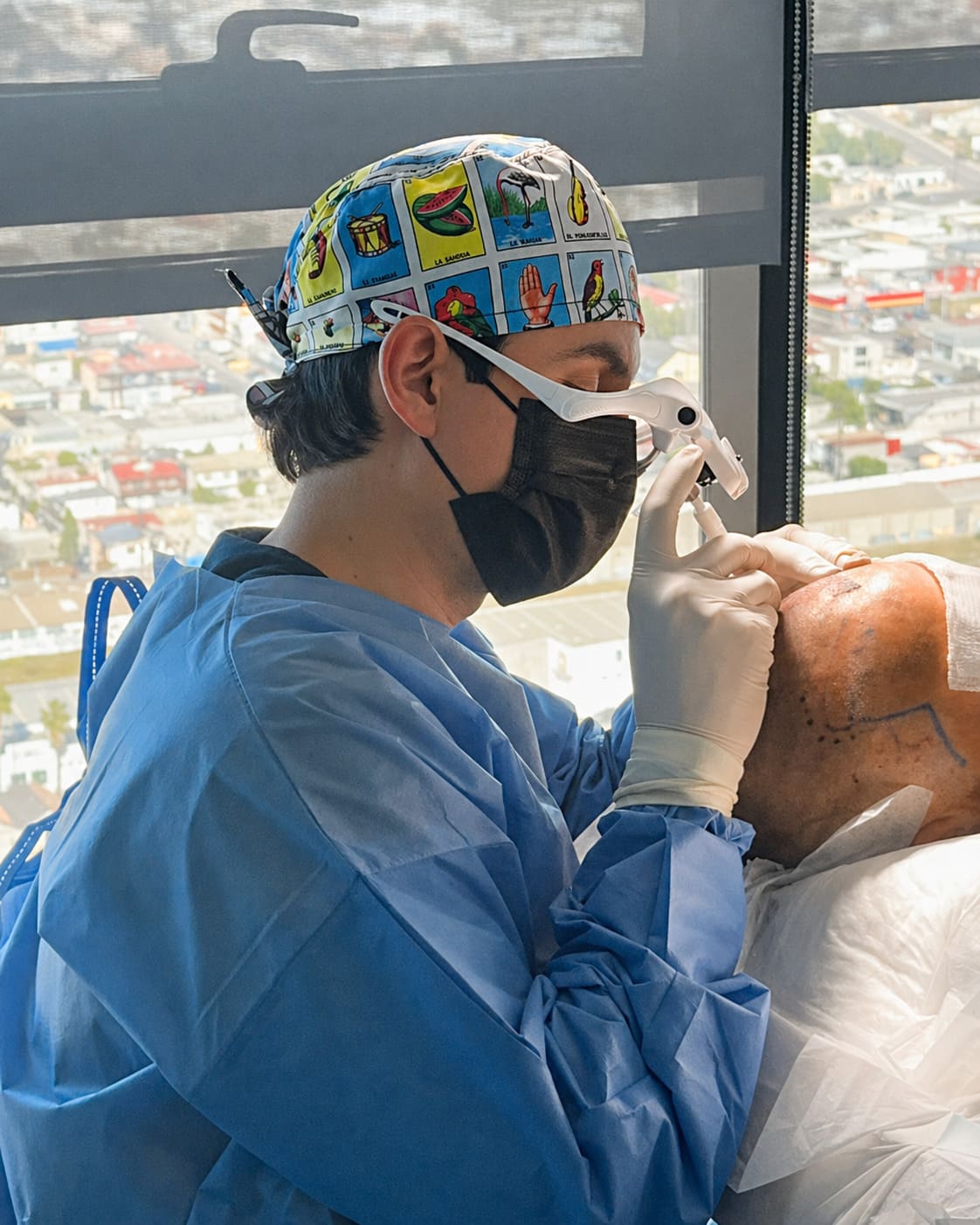
At Hairfix Mexico, the evaluation is an opportunity to discuss achievable coverage and the limitations that could affect your result.
What If You Are Not a Suitable Candidate?
A recommendation against a transplant can protect you from an outcome that falls short of your goals.
Ask your doctor which alternatives fit your diagnosis. Depending on your situation, options may include medical treatment for ongoing hair loss or cosmetic approaches, such as a hair system.
Medical treatment cannot guarantee that someone with limited donor hair will become a transplant candidate. The aim is to choose an approach that matches your condition and expectations.
Find Out What Is Realistic for You
Before ruling yourself out, request a medical assessment. Bring clear photos of your hairline, crown, sides, and back, and explain what improvement you want.
Photos can start the conversation, but they cannot replace a thorough scalp examination.
Contact Hairfix Mexico to request an evaluation and learn whether your donor hair can support your hair restoration goals.
