
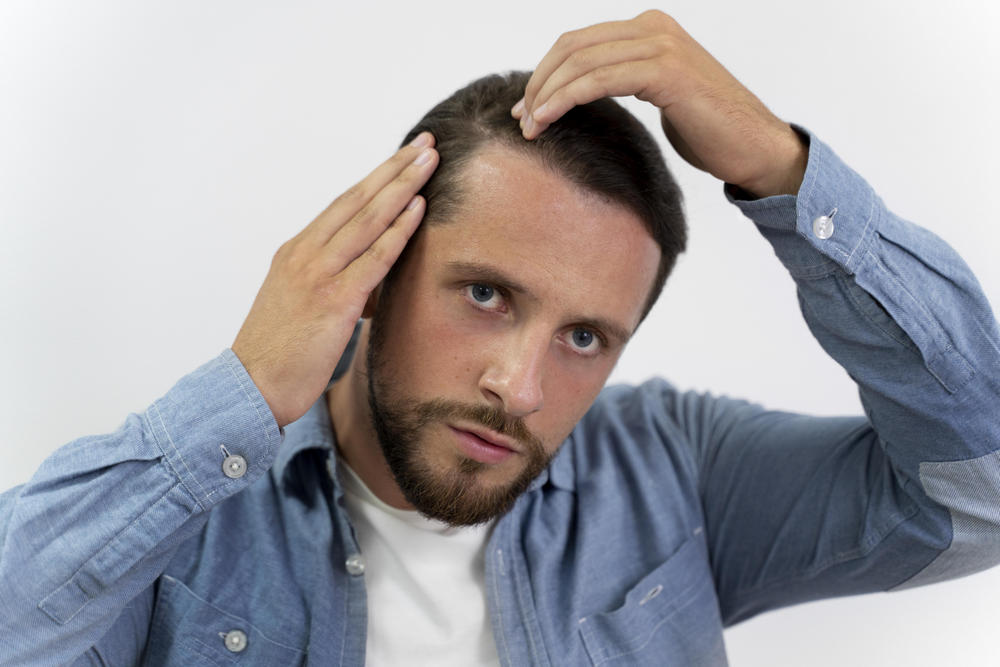
Over the last few years, hair loss has become increasingly prevalent among the younger population worldwide. While the reason for this is unknown, researchers suspect it may be due to stress, environmental pollution, and a poor diet. While researchers continue to look for a reason, some believe testosterone’s impact on hair growth and loss has something to do with it.
Testosterone’s Impact on Your Body
Testosterone is believed to be a predominantly male hormone, but that myth is true; it omits one large truth: female bodies also produce small amounts of testosterone.
Testosterone in Males
Testosterone is produced in the testicles of men and pubescent boys. It allows the body to develop bone density, a deeper voice, muscle mass, sperm production, your sex drive, and erectile function. Testosterone is related to hair growth, as it stimulates the production of all body hair. It also influences your energy level, how your fat is distributed, your moods, and red blood cell production. It also affects your spatial reasoning and verbal memory.
Testosterone in Females
In women and pubescent girls, testosterone is produced in the adrenal glands and ovaries.
Like males, females have testosterone that influences their libido, muscle mass, and bone density. It also impacts energy levels and mood. It is believed that it protects the female brain and affects her cognition. Testosterone helps the female body regulate menstruation, fertility, and ovulation.
As women reach the age of twenty, their testosterone levels decrease, with the largest decrease around the age of thirty-five. Unfortunately, taking birth control pills (due to the estrogen) can lower testosterone. Once a woman reaches menopause, testosterone plays a more dominant role as a hormone.
Impactful Symptoms
Symptoms of low testosterone are the same in women and men; they include,
- Fatigue
- Decreased muscle mass
- Diminishing sex drive
- Depression
- Insomnia
- Weight gain
Testosterone’s Relation to Hair Loss
Dihydrotestosterone (DHT) is a byproduct of testosterone. Once a male and female have surpassed puberty, DHT regulates the prostate in men and hair growth in both sexes. In men and women, DHT plays a role in hair loss. Still, its role is particularly significant if you are genetically predisposed to hair loss, specifically male or female pattern baldness. The DHT shrinks the hair follicles as the hair grows finer. This shrinkage causes hair loss.
In this relationship, it is fair to say that testosterone creates hair growth, and dihydrotestosterone accelerates hair loss.
The Impact of Male and Female Patterns in Hair Loss
Males: Hair loss in men starts at the frontal hairline, with the hair thinning out in a shape like the letter “M,” and then proceeds to the crown until the hair loss takes on the shape of a “U,” with hair remaining at the sides and back of the head.
Females: Hair loss in females hair loss starts at the natural part of the hair, moving outward in a triangular shape.
Hair loss can manifest as shedding hair on your pillow or the gradual loss of hair throughout the day, resulting in the loss of approximately 100 strands of hair daily. Once the hair has been lost, it may not grow back on its own.
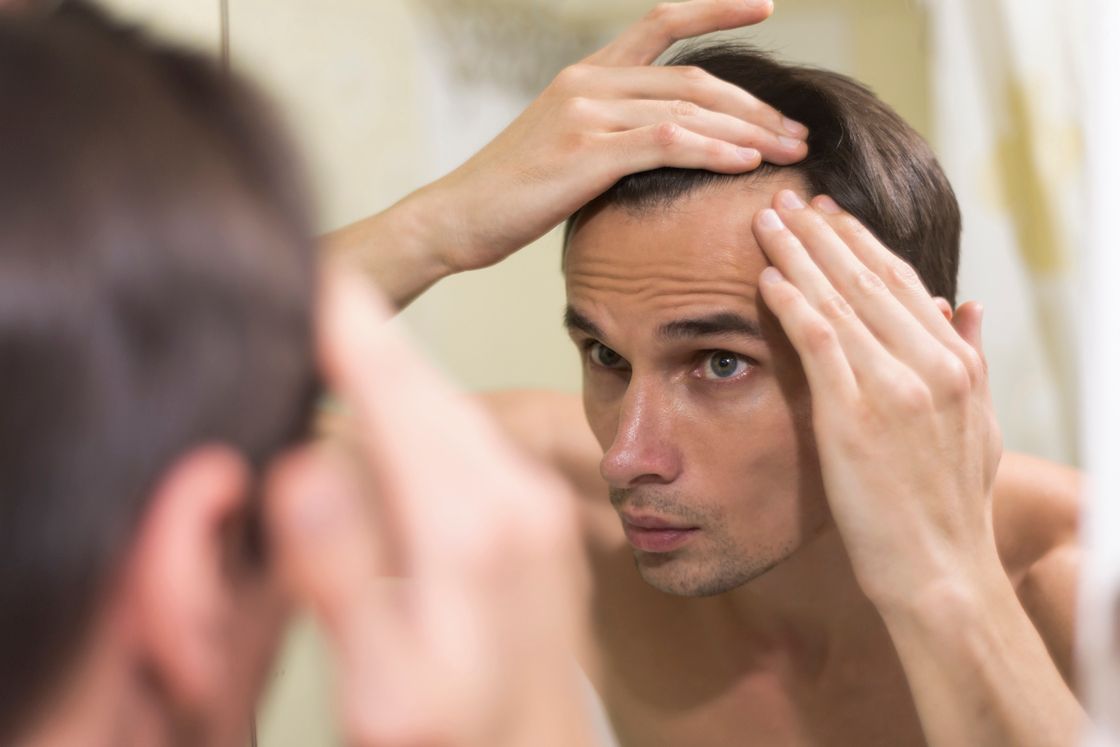
Treating Hair Loss
Medication (Non-invasive)
- DHT Blockers are only a temporary solution. While they slow down hair loss, you still experience hair, just at a slower rate. If you are considering a more invasive hair fix, DHT blockers can buy you some time!
- Finasteride is a prescription oral medication used to treat male pattern baldness. Its action is to lower DHT, slowing hair loss and encouraging new hair growth.
- Rogaine, also known as Minoxidil, is applied to the scalp. It’s used for both men and women, but women should take the lower dose.
Whether you are using a prescription or OTC treatment, always see a doctor first. Not all individuals are good candidates for these meds. Many of the hair loss meds are injectable or offer patches as alternative options. How the medication is taken does not affect its effectiveness.
Invasive Hair Loss Treatments
- Microneedling is the use of microneedles on the scalp to help stimulate the hair follicle’s stem cells to promote growth. It is often combined with medications and platelet-rich plasma therapy.
- Platelet-rich Plasma (PRP) therapy uses your own platelets to create a concentration that is then injected into your scalp to promote hair regrowth.
- Low-level laser therapy (LLLT) is a treatment that combines near-infrared light with red light to stimulate hair follicles. These treatments can be performed using a laser comb or helmet, which can be used at home.
- Hair transplant involves surgery to move healthy hair from the fuller areas of your scalp to the balding areas. At HairFix, located in Tijuana, our hair restoration specialists utilize Follicular Unit Extraction (FUE) and Direct Hair Implantation (DHI) techniques to ensure you achieve a full head of healthy hair.
Hair Loss Myths
Is testosterone the cause of hair loss?
No, testosterone does not cause hair loss. But elevated testosterone levels increase the DHT levels that cause male and female pattern baldness.
If I start Testosterone Replacement Therapy (TRT), will my scalp naturally replace the hair I have lost?
No, sadly, taking testosterone replacement meds increases the testosterone level and will convert to DHT, which causes hair loss. DHT levels are carefully monitored while on testosterone supplements to avoid hair loss.
My father lost his hair, and I lost mine. Does that mean my son will also experience hair loss?
While male pattern baldness is genetic, it doesn’t mean your son will lose his hair. While it puts him at a higher risk, if he is mindful of hair loss and consults a specialist before it starts, he may be able to prevent or minimize hair loss.
While testosterone is related to hair growth, increased testosterone levels are converted into DHT, which causes thinning, hair shrinkage, and hair loss. Don’t let it affect your self-esteem.
Testosterone’s impact on hair growth and loss is treatable, offering various treatment options.
HairFix in Tijuana is the premier destination for hair restoration in Mexico. Our experienced staff believes hair restoration should be affordable to all who want it. Our high-quality transplant methods rival those offered in the US. Contact us today to schedule a free consultation!