
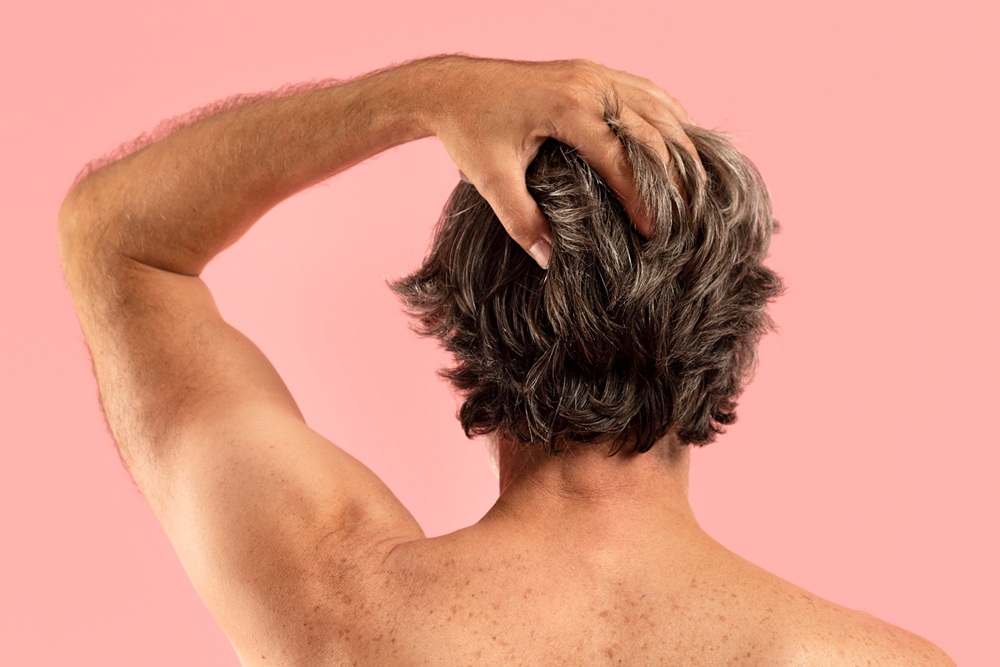
An increasing number of individuals experiencing alopecia view hair restoration surgeries as the definitive solution to reclaim their hair’s health and aesthetics. However, crucial questions inevitably arise during the decision-making process, with the achievable final volume being one of the most frequent concerns. Understanding realistic hair transplant density results is the foundational step to ensuring a natural-looking transformation completely free of false expectations.
High vs. Low Hair Density: The Secret to a Natural Result
Hair density is clinically defined as the number of hair follicles coexisting per square centimeter on the scalp. To understand how a surgeon designs a completely undetectable and natural hairline, it is essential to classify this measurement into two distinct medical categories:
- High Density: A healthy scalp unaffected by pattern baldness typically hosts between sixty to one hundred follicular units per square centimeter, heavily influenced by genetics and hair thickness.
- Low Density: This occurs when the count drops below forty follicular units per square centimeter, which allows light to filter through and causes the scalp to become visibly noticeable.
This anatomical baseline allows the surgeon to map out thinning regions and simulate optimal coverage by restoring approximately 50% to 60% of your native density. In modern hair restoration, achieving 100% of the original density in a balding zone is neither biologically viable nor necessary to deceive the human eye and create a thick appearance.
How Many Follicular Units Are Required for a Transplant?
The precise number of grafts required for your procedure is calculated by measuring the exact surface area of the recipient site in square centimeters and evaluating your hair loss pattern on the Norwood Scale. Distribution requirements vary drastically depending on the specific region targeted for restoration, making a customized mathematical approach indispensable:
| Hair Loss Grade (Norwood Scale) | Estimated Follicular Units | Visual Density Achieved | Realistic Coverage Expectation |
|---|---|---|---|
| Grade II – III (Hairline & Temples) | 1,500 to 2,500 grafts | High (50 – 60 grafts/cm²) | Full coverage and complete restoration of the frontal hairline with an entirely natural look. |
| Grade IV – V (Frontal & Crown) | 3,000 to 4,000 grafts | Moderate-High (40 – 50 grafts/cm²) | Excellent frontal density paired with strategic placement to blend into the crown’s natural swirl. |
| Grade VI – VII (Advanced Hair Loss) | 4,500+ grafts (Multiple Sessions) | Moderate (30 – 40 grafts/cm²) | Optimal cosmetic coverage prioritized to frame the face and address high-visibility areas. |
These clinical boundaries safeguard the integrity of your donor area, preventing over-harvesting so that no empty gaps or visible thinning occur at the back of your head. Certified specialists calculate this balance meticulously at our state-of-the-art facilities in NewCity Medical Plaza, ensuring a highly satisfying aesthetic outcome without compromising your long-term scalp health.
What Happens if the Procedure Fails to Achieve Proper Density?
- The See-Through Effect: This happens when an insufficient number of grafts are implanted or if the survival rate of the extracted tissue is exceptionally low. Under direct sunlight or bright indoor lighting, the scalp remains highly visible due to an excessive, unnatural gap between hairs.
- Over-Harvesting and Dense Packing: This is the opposite hazard, where too many grafts are placed tightly together during a single session. This crowding cuts off local blood supply, depriving the tissue of essential oxygen and causing graft failure along with visible scarring.

Medical Factors Influencing Graft Survival Rates
- Intraoperative Precision: The surgical team’s expertise in creating microscopic recipient sites dictates the survival rate of each graft. Perfect angulation matching your native hair and rapid implantation reduce cellular stress on the stem cells, preventing the follicles from dying outside their natural environment.
- Post-Operative Compliance: Final success also relies heavily on your commitment during the first two consecutive weeks following your clinic session. Adhering to the specialized washing protocol prevents scabs from suffocating new growth, while avoiding accidental friction secures the grafts until they root permanently.
Clinical Alternatives for Low-Density Scenarios
For individuals presenting with advanced hair loss, scheduling two separate sessions months apart stands as the safest and most effective clinical pathway. Optimizing these aesthetic outcomes frequently requires incorporating complementary non-surgical treatments:
- Advanced Mesotherapy Hair: This involves targeted micro-injections that deliver essential vitamins, minerals, and growth factors straight to the root. This treatment accelerates cellular recovery and successfully increases the diameter of your existing hair shafts.
- Guided Anti-Androgen Medications: Utilizing prescription therapies under strict medical supervision is vital to halt the thinning of remaining native hair. This non-surgical support ensures the global volume achieved through your hair transplant density results remains perfectly stable over the years.
Is mesotherapy an ally for patients with such low density that a hair transplant is not recommended? Yes — mesotherapy can be an excellent standalone treatment in early-stage cases or when donor density is insufficient for surgery. It stimulates follicular activity, strengthens existing hair, and can delay or even prevent the need for a transplant.
Frequently Asked Questions About Hair Transplant Volume
How do I know if my donor area has sufficient density for a transplant?
Donor viability is determined during your clinical consultation through an advanced digital evaluation called trichoscopy, which magnifies the scalp. This analysis allows us to measure precisely how many hairs emerge from each follicular unit at the back of your head. If your donor site features a high concentration of units containing three to four hairs each, you are considered an ideal candidate.
Will the transplanted hair thin out over time or is it permanent?
Hair follicles harvested from the back and sides of the scalp carry a lifelong genetic immunity to the hormone DHT. DHT is the primary androgen responsible for weakening and miniaturizing hair follicles in classic male and female pattern baldness. Once relocated to the thinning zones, the transplanted grafts retain this permanent resistance, ensuring they grow continuously.
Does coarse hair provide a denser appearance than fine hair?
The diameter and texture of the hair shaft play a massive role in creating visual volume and shadowing across the skin. Coarse or thick hair covers significantly more surface area, which allows us to achieve an incredibly dense appearance using fewer total grafts. Conversely, fine hair requires a tighter, highly strategic implantation pattern to prevent see-through results.
Restore Your Confidence with the Trusted Expertise of Hairfix
Gaining a thorough, transparent understanding of realistic hair transplant density results empowers you to make an informed, confident decision free of commercial deception. Allow our fully bilingual, internationally certified medical team to evaluate your unique hair profile at our premium facilities on the 29th floor of NewCity Medical Plaza. Located in Tijuana’s world-class medical tourism district—just 10 minutes from the U.S. border—Hairfix delivers bespoke restoration plans using cutting-edge technology at a fraction of U.S. costs. Take the first step toward your transformation today, book your complimentary medical consultation, and look forward to wearing a thick, full head of hair once again.
Fuentes