


Deciding to undergo a hair transplant is more than just an investment in your health and well-being—it’s an emotional journey filled with hope. Day after day, you check your progress, patiently waiting to see those changes reflected in fuller, more abundant hair.
But what happens when the results aren’t what you expected? Whether it’s lower-than-desired density, a design that doesn’t feel like you, or poor healing, that initial excitement can quickly turn into uncertainty or disappointment.
The good news is that hair transplant repair is possible. Today, we’ll explain what a repaired hair graft involves and how it can help restore both your hair—and your confidence.
What Is a Hair Graft Repair?
A hair transplant repair is a surgical procedure designed to correct the results of a previous hair transplant. It is also known as graft extraction surgery, as it involves undoing or revising prior work in order to achieve the appearance you originally envisioned but couldn’t obtain in the first procedure.
Why Might a Hair Transplant Need Repair?
An unsatisfactory result can stem from multiple factors and doesn’t always mean that the initial procedure was poorly performed. Some of the most common reasons include:
The “Doll Hair” Effect
The so-called “doll hair” appearance is commonly seen in procedures performed using outdated techniques or by inexperienced hands that implant large hair clusters instead of individual follicular units. The result looks artificial, with dense patches of hair in some areas and sparse coverage in others.
A Poorly Designed Hairline
Your frontal hairline deserves a personalized design that complements your facial features, age, and physical structure. When the hairline is drawn too “perfect” or placed too low, the result can appear unnatural and immediately noticeable.
Incorrect Growth Angle and Direction
Hair does not grow the same way across the scalp. The crown follows a radial pattern, while the frontal area grows at very specific angles. If the natural direction isn’t respected, transplanted hair can grow in awkward angles, making styling difficult and producing an artificial look.
Visible Scarring
A common issue associated with the strip technique (FUT) is overharvesting the donor area. This happens when too many follicles are extracted from a limited and visible zone. The result may be excessive hair density in the front and thinning at the back—or a noticeable scar on the nape that cannot be concealed due to insufficient surrounding hair.
“Islands” of Hair Around the Transplant
Unfortunately, it’s common for clinics to skip a comprehensive hair analysis to determine the type and progression of alopecia. When the underlying hair loss isn’t stabilized, the transplanted hair may remain isolated, forming an “island” surrounded by areas that continue to thin over time.
Inadequate Postoperative Care
After a hair transplant, the patient plays a critical role in protecting the newly implanted grafts. Following postoperative instructions precisely is essential.
If micrografts are not properly cared for during the first few weeks—due to improper washing, premature sun exposure, or intense physical activity—even the most technically flawless surgery can fail. In these cases, hair graft repair aims to recover what was lost, but always under a strict commitment to postoperative care.
How Is a Hair Transplant Repair Performed?
Correcting a previous procedure is often more complex than performing a transplant from scratch. It’s not simply about adding more hair—it’s about restructuring what’s already there. This requires an honest diagnosis and meticulous execution through the following steps:
Viability Analysis
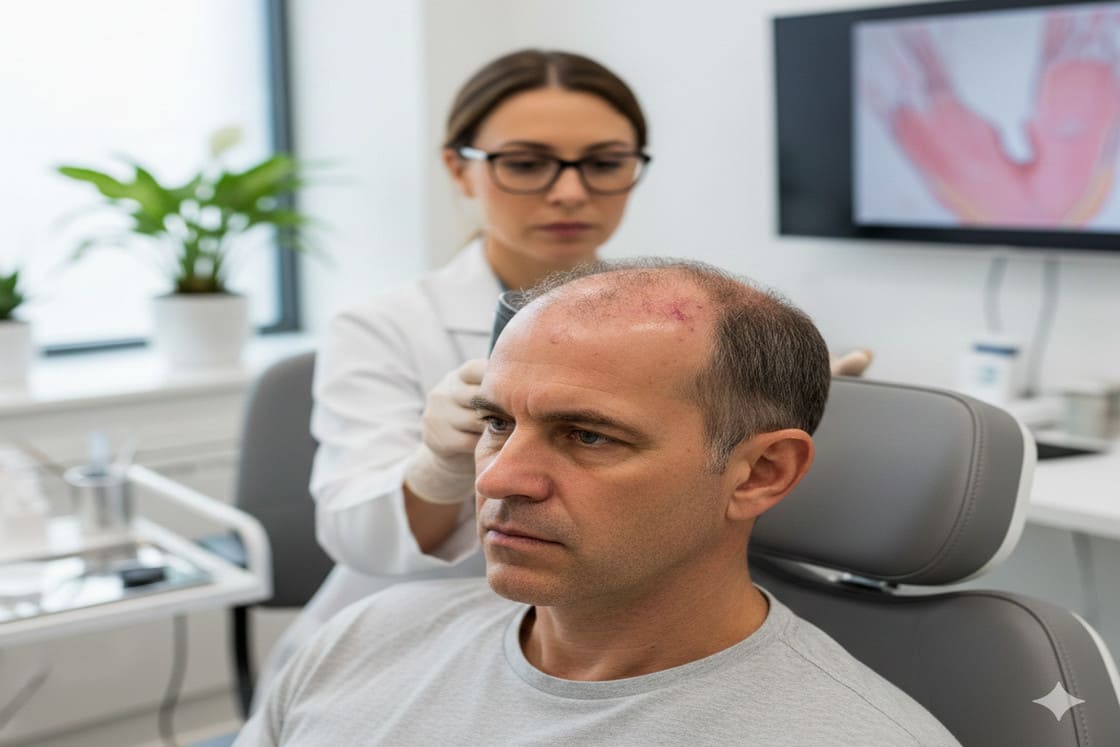
Before touching a single follicle, a comprehensive hair analysis is essential. In a hair transplant repair, the most valuable resource is the remaining donor hair. We must determine whether there is enough density available or if the donor area has been overharvested in previous surgeries.
This analysis allows us to be transparent and realistic, explaining exactly what can be achieved without compromising long-term hair health.
Strategic Redistribution
When the main issue involves poorly positioned follicles or the “doll hair” effect, the process requires surgically removing those misplaced grafts.
Once carefully extracted, they are treated and reimplanted at the correct angle and direction, following the natural flow of the scalp. It’s like erasing an incorrect stroke and redrawing it with precision.
Precision Camouflage
Achieving a natural-looking repaired hair graft often depends on advanced camouflage techniques. This involves adding single-hair follicular units to critical areas, such as the frontal hairline.
By doing so, we soften harsh or artificial lines from the previous surgery, creating a smooth and natural transition between the forehead and the rest of the hair. The goal is to restore facial harmony and natural density.
Scar Correction and Camouflage
Scars from previous procedures—especially those performed using the FUT technique—can be a lasting concern. To correct them, follicular units are carefully extracted and implanted directly into the scar tissue to fully conceal it.
Even in cases where the scalp has become tight due to previous reduction procedures, this technique offers an effective solution to restore the appearance of the affected area.
How Long Should You Wait Before a Repair?
This is one of the most common questions among patients seeking hair transplant repair. While the urgency to fix an unsatisfactory result is completely understandable, patience is essential.
In general, we recommend waiting at least one year before undergoing corrective surgery, for two key reasons:
Final results. After a hair transplant, true density and coverage aren’t visible until the full growth cycle is completed—typically 12 to 14 months. Operating sooner would mean working on an unfinished canvas.
Tissue recovery. The scalp needs time to heal fully and restore elasticity and blood supply after the initial procedure. Operating on tissue that is still healing could compromise the survival of new grafts.
At Hairfix, we use this waiting period to meticulously plan the repair strategy, ensuring that when the time comes, results are precise and natural.

A Second Chance for Your Image
An unnatural result or one that makes you feel uncomfortable doesn’t have to be permanent. At Hairfix, our priority is that when you look in the mirror, you see the reflection you always envisioned—with the natural appearance you deserve.
Successful hair graft repair isn’t just about technology; it depends on the surgeon’s ability to understand facial harmony, hair biology, and, above all, each patient’s unique story.
At Hairfix, we combine technical precision with a human-centered approach. If your previous transplant doesn’t feel right, remember that hair transplant repair is a real opportunity to achieve the density, angle, and natural look you were searching for.
Schedule your evaluation appointment—let’s restore your confidence together.