
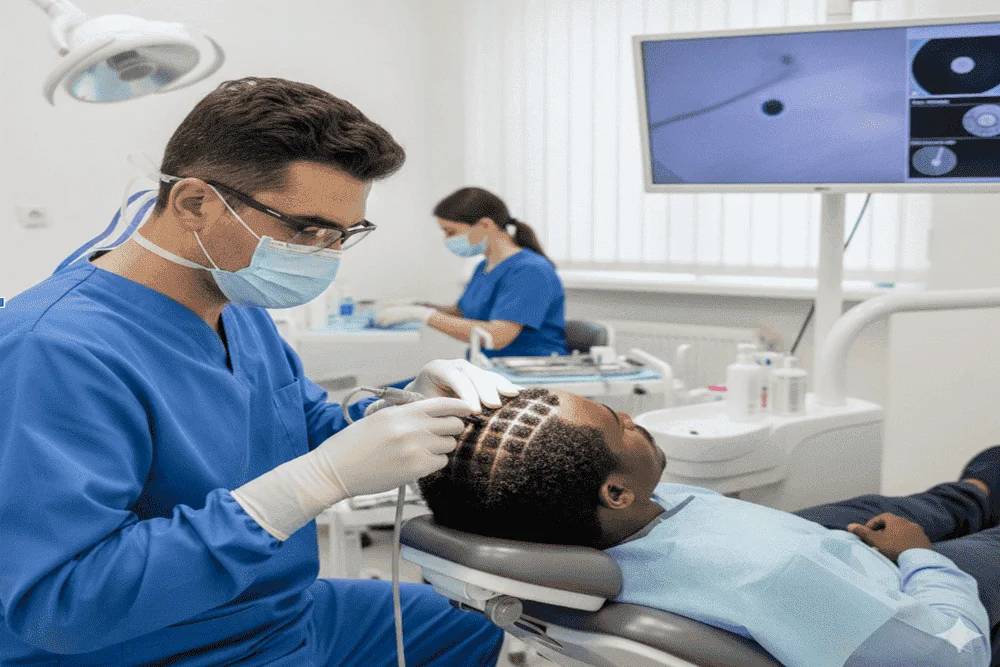
In 2024, approximately 3.44 million hair transplants were done worldwide. As more individuals undergo hair transplants, many will be African American. While many think they can’t have a transplant due to the characteristics of their hair, let’s dispel the myth about afro hair transplants and learn what you need to know.
How Effective Are Afro Hair Transplants?
Despite the myths that African Americans can’t get hair transplants, African American hair transplants are extremely effective. Unlike straight hair, African American hair is curly, fuller, and thicker. It has the ideal texture. The benefit of having this hair type means you may not need as many hair follicles to attain natural-looking results and the volume you want.
An Afro hair transplant requires a procedure tailored to kinked, tight, curly hair. Seeing a hair specialist who has experience with your hair type is a must!
FUE vs. DHI Transplants
Follicular Unit Extraction (FUE)
The FUE method is a two-step process. Extracted hair grafts are removed one at a time and implanted into circular incisions in the scalp. This process reduces follicle damage, creating natural-looking hair. This method is cost-effective for larger areas of the scalp.
Direct Hair Implantation (DHI)
DHI is an advancement in the FUE method. It is done with a special pen that extracts the graft and implants it in one step. The hair specialist has more control over the depth, angle, and direction of the hair, offering a more natural-looking hair. Healing time is minimal, the results look natural, and it is easier and quicker to do a large area on the scalp. Depending on the clinic you use, direct hair implantation may be more expensive. When DHI is done, the hair is not exposed to air as long as in FUE, which means more hair follicles will survive. DHI is also ideal for frontal hair loss.
In both procedures, the incision sites must be kept clean to prevent hair damage and promote healing. Most hair specialists have ways to make you heal quickly. The areas where follicles are removed are concealed post-procedure!
Most individuals see natural-looking hair and new hair growth within 3 to 6 months. How quickly you will see full hair growth depends on your hair growth cycles and the process used.
Keloid scarring results from excessive collagen deposition in the scar, leading to hard, raised, shiny scars. Keloids can grow larger than the harvest area and persist for months or years after the transplant. Having darker skin increases your risk of keloids.
What Types of Afro Hair Loss Do Transplants Fix?
African American hair transplants are perfect for traction alopecia. Traction alopecia is caused by very tight hairstyles, such as braids, cornrows, weaves, tight ponytails, and heavy dreadlocks. It is essential that you contact a hair specialist as soon as you see hair loss to avoid permanent hair loss.
Androgenic Alopecia, also known as female and male pattern baldness, can also be treated with hair transplants. Androgenic alopecia begins at the crown or temples with slow hair loss until you are bald. For most men, the hairline starts to recede, whereas women experience thinning hair throughout the scalp.
Besides genetics, lifestyle and hairstyle also determine hair loss risk.
Selecting a Donor Sight
Where the hair comes from for the transplant is as important as the process to fix it. African American transplants should be taken from the back of the head, as there tends to be more in that area, and the site is not prone to thinning.
African American Hair Transplant Benefits
African American Hair Transplants help boost self-confidence and improve the quality of life. It is a permanent fix for hair loss with minimal scarring. The results are a natural-looking hairline with fuller, thicker hair. The best part is that the transplant offers long-lasting results.
All successful transplants have after-care instructions that should be strictly followed to maximize hair growth. Transplant-specific hair care products may be needed, and hairstyles that pull on your hair should be avoided. Seeing your hair specialist regularly post-op will maintain your new hair growth and catch new hair loss early.
Remember, the best transplant results come from hair specialists with experience with African American hair.
FUE and DHI transplants are effective methods for African American hair transplants. Choosing one over the other is a personal decision after an initial consultation with a hair transplant specialist. Both methods will leave you with a full head of curly hair, boosting your self-esteem.
Our hair transplant in Mexico experts at Hairfix Mexico are experienced in Afro hair transplants. We offer the same superior outcomes as our US counterparts at a 60% discount. Our all-inclusive hair transplant package provides everything you need for a successful procedure and post-operative care. Fill out or free consultation form and begin your journey to thicker. Fuller hair today!